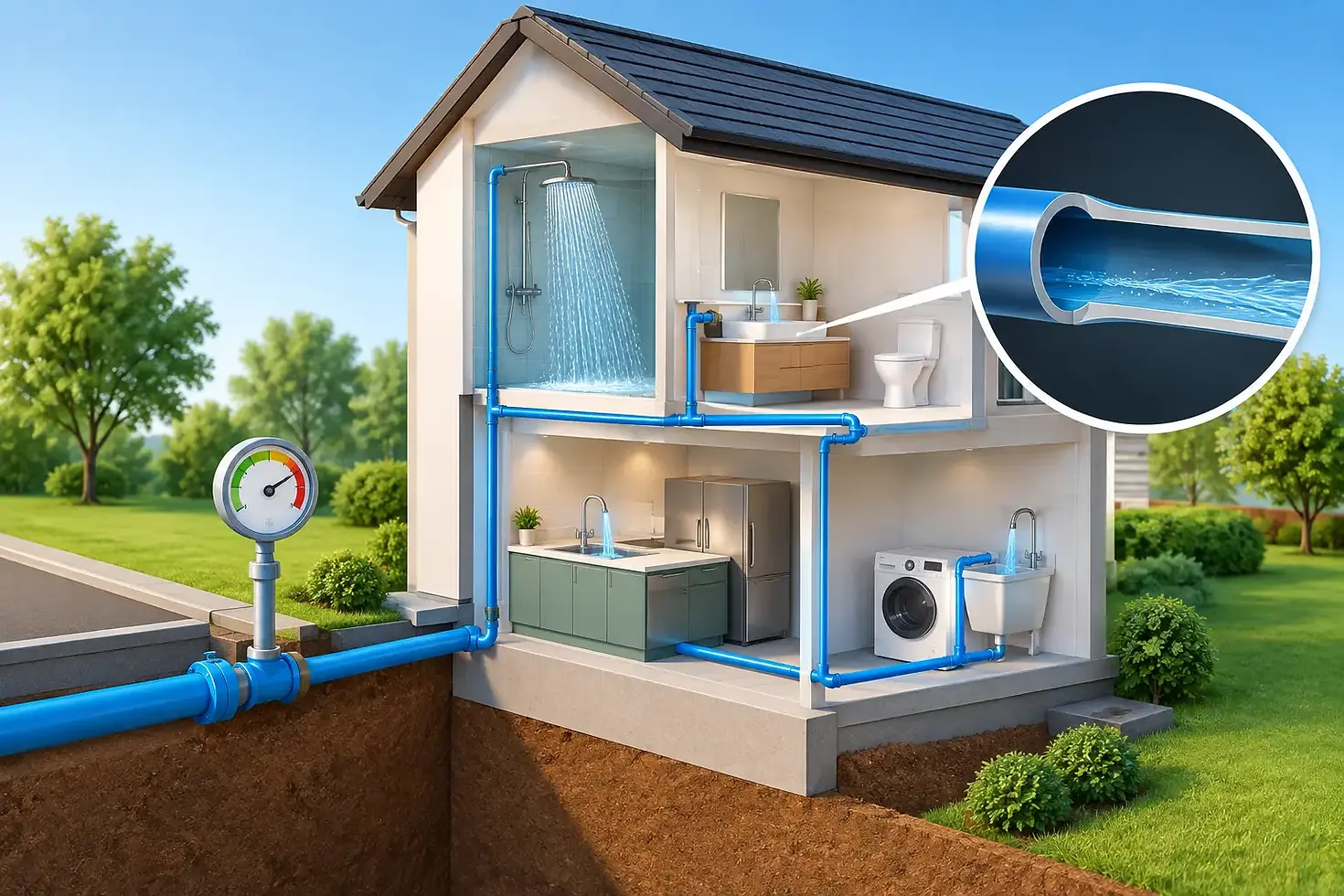
Why Does Water Pressure Drop in Your Home?
A shower that turns weak halfway through, a slow-filling toilet cistern or taps that barely rinse a sink can quickly disrupt a property. If you are asking, why does water pressure drop, the answer depends on whether the issue affects one outlet, the whole property, hot water only, or the wider street. Identifying that pattern first helps prevent wasted time and ensures faults that could cause damage are dealt with promptly.
For homeowners, landlords and managing agents across London, low pressure is more than an inconvenience. It can affect tenant comfort, boiler operation, appliance performance and, in some cases, indicate a hidden leak. A qualified plumber can establish the cause safely and advise where responsibility sits.
Why does water pressure drop? Start with the pattern
Water pressure is the force pushing water through the pipework. Water flow is the volume arriving at the tap. The two are related but not identical. A property may have reasonable incoming pressure but poor flow because a restriction, partially closed valve or scaled pipe is limiting the supply.
Before assuming there is a major fault, check whether low pressure is happening at every cold tap and shower. If it is limited to one fitting, the problem is usually local. If cold water pressure is weak throughout the property, the issue may be with the incoming mains supply, a stopcock, a leak or the external network.
Then compare hot and cold water. A combi boiler supplies hot water directly from the mains, so reduced hot water flow with normal cold water often points towards the boiler, its filters, a thermostatic shower valve or internal scale. Properties with stored hot water and tanks can have different pressure characteristics altogether, particularly in older London homes.
Common causes of low water pressure
A partially closed internal stopcock
The internal stopcock controls the mains water entering the property. It is often found beneath the kitchen sink, near the front door or in a utility area. If it has been left partly closed after plumbing work, the entire property may experience reduced flow.
Do not force a stiff or corroded valve. Older stopcocks can fail when disturbed, creating a leak at the spindle or body. If the valve will not operate freely, arrange for a plumber to assess and replace it rather than risking water damage.
A localised blocked tap, showerhead or valve
Where one tap has lost pressure, debris in the aerator is a frequent cause. Limescale is particularly common in London, and it can restrict showerheads, tap inserts and filters. Cleaning or replacing the affected component may restore normal flow.
A thermostatic shower valve can also become blocked or fail internally. If the basin tap performs normally but the shower is weak, do not assume the supply to the property is at fault. The shower valve, hose or head may need servicing or replacement.
Limescale and ageing pipework
Hard water leaves mineral deposits inside fittings and, over time, can reduce the effective bore of pipework. This is more likely in older properties with original or poorly maintained plumbing. Galvanised steel pipes are especially prone to internal corrosion and restriction.
Replacing a short damaged section may be sufficient, but not every pressure problem has a quick fix. Where pipework is extensively corroded, a planned upgrade can offer a more reliable long-term result than repeated call-outs for restricted outlets.
A leak on the supply pipe or internal pipework
A sudden reduction in pressure throughout the property can be a warning sign of a leak. Look for damp patches, staining, mould, unexplained water around pipework, a constantly moving water meter or the sound of water running when all outlets are off.
Not all leaks are visible. A concealed leak beneath floors, behind walls or on an underground supply can cause progressive damage before it becomes obvious. If pressure has dropped suddenly and there are signs of escaping water, isolate the supply if safe to do so and arrange urgent investigation.
For flats and managed blocks, the source may be within a communal riser, shared pipework or another part of the building. Property managers should record affected units and report the pattern early, as this helps establish whether a building-wide response is needed.
A problem with the external water supply
If neighbours are experiencing the same issue, or the pressure drops at similar times each day, the cause may sit outside the property boundary. Planned works, burst mains, network demand and local supply issues can all affect pressure temporarily.
Check the water supplier's service updates and ask nearby properties whether they are affected. If the issue is limited to your property, external works are less likely to be the explanation. A plumber can check the internal installation before unnecessary work is commissioned.
Boiler-related hot water pressure problems
With a combi boiler, a drop in hot water flow may be caused by a blocked inlet filter, a scaled plate heat exchanger, a restricted hot water outlet or a faulty diverter-related component. The heating pressure displayed on the boiler is separate from domestic hot water pressure, so a gauge reading alone does not confirm that the hot water supply is healthy.
Do not remove boiler casings or attempt repairs to gas appliances yourself. Work on gas appliances must be completed by a Gas Safe registered engineer. If hot water has reduced significantly, fluctuates or cuts out, a professional inspection protects both the appliance and the occupants.
Shared supplies, tanks and booster systems
Many London flats, converted buildings and larger managed properties have more complex water arrangements. They may use shared incoming mains, roof tanks, cold-water storage cisterns, pressure-reducing valves or booster pumps. A fault in any of these components can affect several outlets or multiple dwellings.
Booster pumps require careful specification. Installing one simply to improve a weak shower can be inappropriate, particularly if it draws directly from the mains and affects other users. The correct solution depends on the property's existing system, available supply and applicable water regulations.
Safe checks before arranging a visit
There are a few sensible checks that can help clarify the fault without interfering with the system. Confirm whether the problem affects hot water, cold water or both. Try more than one tap, including a ground-floor outlet where possible. Check whether the stopcock appears fully open, but do not force it.
Also check for visible leaks beneath sinks, around the boiler and near appliances. If you have a water meter, observe whether it continues to register usage after all taps, appliances and toilets are off. Record when the pressure issue started and whether it is constant or worse at particular times.
For landlords and managing agents, ask occupants whether neighbouring flats are affected and whether there have been recent works to the building. Clear information allows a contractor to arrive prepared and helps avoid delays in assigning responsibility.
When low pressure needs urgent attention
A weak tap can wait for a planned appointment if there is no leak and the property still has a safe water supply. However, act more quickly where pressure loss is sudden, widespread or accompanied by water staining, flooding, a boiler fault or no usable hot water.
If a pipe has burst or water is escaping rapidly, turn off the internal stopcock if it can be operated safely. Switch off electrical power to any affected area only if you can do so without contact with water. Do not use a damaged boiler, immersion heater or electrical appliance near a leak.
In tenanted properties, prompt action is also part of good property management. Delays can increase repair costs, inconvenience residents and create avoidable disputes over damage. Keep a record of reports, attendance and remedial work, particularly where shared systems or insurance claims are involved.
Professional diagnosis avoids guesswork
The right repair starts with accurate testing. A competent plumber can assess incoming pressure and flow, inspect valves and filters, trace likely restrictions, identify signs of leakage and determine whether the issue is internal or with the water supplier. Where hot water performance is involved, a Gas Safe certified engineer can assess the boiler and associated controls safely.
K-TEK Plumbing Ltd provides 24/7 emergency support and planned plumbing and heating work across London and the M25. For a sudden pressure loss, suspected leak or recurring hot water issue, arrange a qualified inspection rather than relying on temporary adjustments. A clear diagnosis protects the property, restores day-to-day use and gives owners and managers a documented route to the correct repair.


Comments