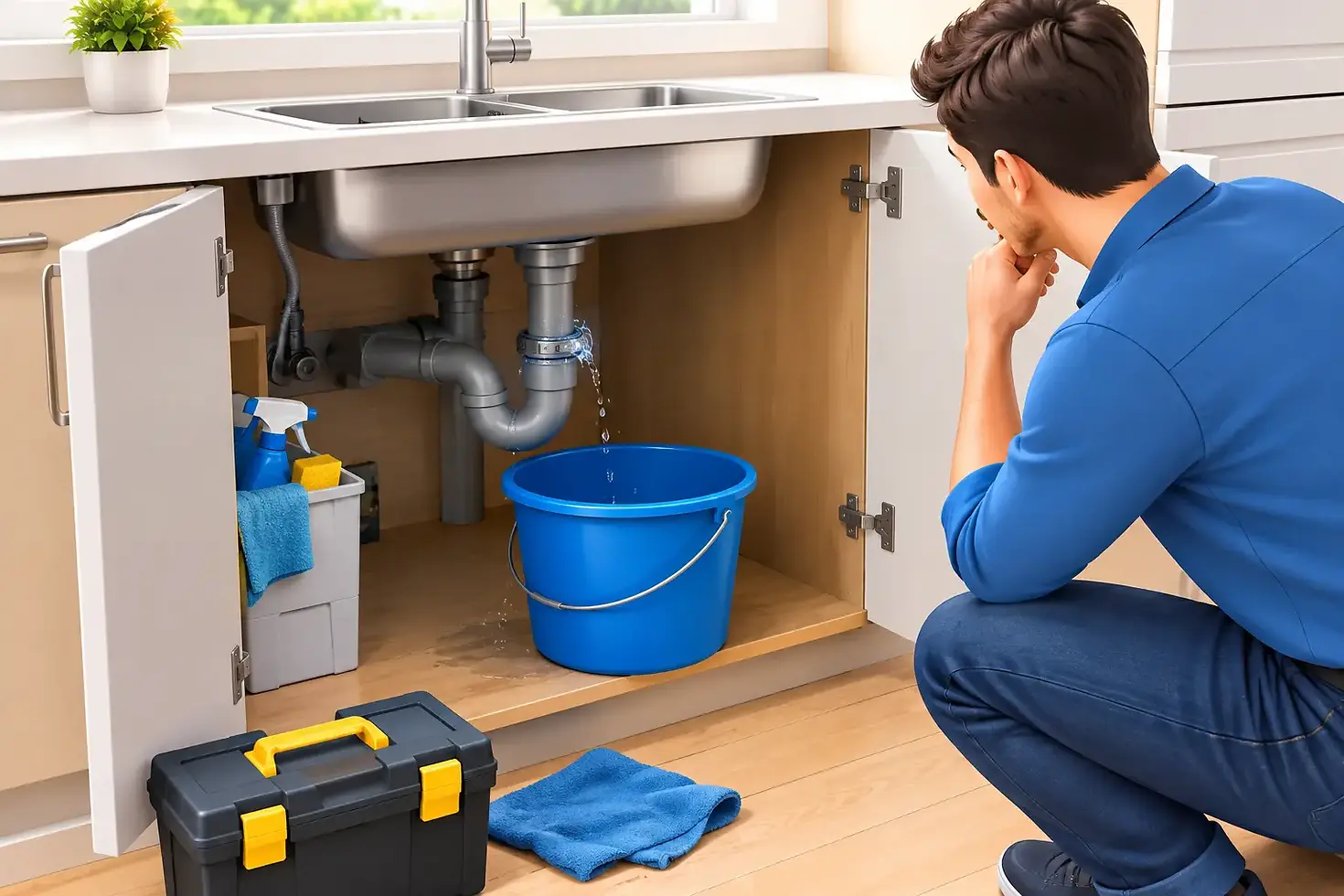
Water Leak Under Sink: What to Do Immediately
A water leak under the sink is rarely something to leave until tomorrow. Water can soak into the cabinet base, swell chipboard, damage flooring and create conditions for mould before the visible puddle looks serious. For landlords and property managers, an unresolved leak can also become a tenant safety issue and lead to avoidable repair costs.
The right response depends on where the water is coming from, how quickly it is escaping and whether electrical fittings are nearby. Start by limiting damage, then arrange a proper repair rather than relying on tape, sealant or a tightened fitting that may fail again.
What to do when you find a water leak under the sink
Place a bowl, bucket or towels under the leak immediately and remove stored cleaning products, bins and other items from the cupboard. Dry the area enough to see where fresh water is appearing. A dry sheet of kitchen roll held against each connection can help identify the source without putting your hands near contaminated waste water.
If the leak is from one of the small valves on the pipework beneath the sink, turn the valve clockwise to isolate the supply. Most modern installations have an isolation valve on each supply pipe, often operated with a flat-head screwdriver. If you cannot safely isolate the local supply, turn off the main internal stopcock. In many homes, this is located under the kitchen sink, but it may be near the water meter, in a utility cupboard or beneath the stairs.
Do not force a seized valve. Excess pressure can snap old pipework or make the leak worse. If water is flowing continuously, spreading outside the cupboard or reaching electrical sockets, appliances or extension leads, treat it as urgent. Keep clear of affected electrical equipment and arrange a 24/7 emergency plumber.
Once the water supply is isolated, open the tap briefly to release pressure. This will reduce residual drips and make the area safer to inspect. Take clear photographs before moving pipework or cleaning up completely, particularly in a rented property or managed block where records may be needed.
Common causes of a water leak under the sink
The source is not always the most obvious wet pipe. Water can travel along a fitting, pool at the cabinet base and appear some distance from the actual fault. A plumber will trace the route of the water before deciding which component needs replacement.
Loose or worn waste connections
The curved trap beneath the basin or kitchen sink is a common source of leaks. Its plastic compression nuts can loosen over time, while rubber seals can harden, flatten or move out of position. This type of leak usually appears when the sink is emptied rather than when the tap is running.
Hand-tightening a plastic waste fitting may stop a minor drip, but overtightening can crack the fitting or distort the seal. If a trap continues to leak, the correct repair is usually to dismantle it, inspect the washers, clean the mating surfaces and replace damaged parts.
Failed tap hoses or supply pipework
Flexible tap connectors, copper tails and isolation valves are under mains pressure. A leak from these components may drip even when no one is using the tap. Look for moisture around valve spindles, braided hoses, compression joints and the underside of the tap body.
A failing flexible hose should not be patched. Hoses can split suddenly and release a significant volume of water, especially in an unoccupied property. Isolation followed by replacement is the safe course of action.
A leaking plughole or sink seal
If water only appears in the cupboard while the bowl is full or draining, the plughole seal may have failed. Kitchen sinks can also move slightly over time, allowing water through the seal between the sink edge and worktop. The leak may then run down the outside of the bowl and look like a pipework issue.
These repairs require the old sealant or failed washer to be removed properly before resealing. Applying more sealant over a damp or degraded surface is unlikely to provide a lasting result.
Blocked waste pipe or damaged trap
Slow drainage, gurgling and unpleasant smells often point to a partial blockage. Water may back up and escape from a weak trap connection, a damaged waste pipe or an overflowing appliance connection. Fat, food debris, soap residue and unsuitable items flushed into the sink can all contribute.
Avoid pouring aggressive chemical drain cleaners into a leaking system. They can damage seals and pipework, create a hazard for anyone dismantling the trap and do not resolve every blockage. Mechanical clearing and inspection are often more reliable.
Condensation that looks like a leak
Cold water pipes may form condensation in warm, humid kitchens or bathrooms. This tends to create a light film of moisture rather than a persistent drip from one joint. Even so, repeated condensation can damage a cupboard base and should be managed with pipe insulation and improved ventilation where appropriate.
When a small drip needs urgent attention
Not every drip requires an emergency call-out, but a small leak can become urgent quickly. Immediate professional assistance is sensible when the leak cannot be isolated, water is running from a pressurised supply, the cupboard base is soft or swollen, or water has reached electrical services.
The same applies if the property will be empty, if a tenant cannot operate the stopcock, or if there is a flat below that could be affected. In converted buildings and blocks, prompt action protects more than one home and creates a clear record that the issue was dealt with responsibly.
Landlords should not assume a tenant can safely diagnose or repair pipework. Clear instructions to isolate the water where possible, contain the leak and report it without delay are more appropriate. A qualified contractor can then establish whether the repair is limited to a washer or involves defective pipework, a faulty appliance connection or hidden water damage.
Why temporary fixes often fail
Waterproof tape, silicone applied around a pipe joint and improvised containers may reduce visible dripping for a short time. They do not restore a failed seal, cracked fitting or corroded connection. In some cases, they conceal the problem until the cabinet, flooring or neighbouring ceiling has already been affected.
There is also a difference between a waste-water leak and a mains-pressure leak. Waste pipework normally leaks during use, while a pressurised supply leak can continue day and night. The latter has much greater potential to cause damage and should be prioritised accordingly.
A proper repair should include testing the system after work is completed. The plumber should run the taps, fill and empty the sink where relevant, inspect every disturbed connection and confirm that no water is tracking from the worktop, plughole or appliance hoses.
Preventing future leaks beneath sinks
Routine checks are straightforward and particularly worthwhile in rental homes, vacant properties and high-use communal kitchens. Open the cupboard occasionally and look for staining, swollen cabinet boards, rust on metal fittings, green deposits on copper pipe and a persistent musty smell. These are often early warning signs rather than cosmetic issues.
Avoid overloading the cupboard so that bottles or bins push against pipework. Take care when storing cleaning products around flexible hoses, and make sure all occupiers know where the internal stopcock is located. Where an appliance such as a dishwasher is installed nearby, include its supply and waste connections in the inspection.
For managed properties, documenting repairs and repeat leaks helps identify patterns. Repeated failure at one sink may indicate poor installation, movement in the unit, unsuitable pipework or an underlying drainage problem that needs a more thorough inspection.
K-TEK PLUMBING LTD provides planned repairs and 24/7 emergency support across London and the M25, with fully insured, qualified engineers focused on containing damage and completing accountable repairs. If a leak is active, isolate the water if safe to do so, protect the surrounding area and arrange professional attention before a minor cupboard drip becomes a wider property repair.


Comments